
If you’re on a strata committee, chances are you didn’t volunteer for the role expecting to become a procurement specialist. But here you are, the building needs a new fire contractor, the current agreement is expiring in three months, and someone has to go to market.
The good news: writing a Request for Tender has never been easier. AI tools like ChatGPT, Claude, or Gemini can get you from blank page to a workable first draft in under an hour — even if you’ve never written one before.
Here’s how to do it.
Start by speaking out what you need
Before you open any AI tool, spend five minutes jotting down the basics. Bonus tip: you can record yourself using iOS voice recorder or Android’s equivalent, then copy the full transcript it generates for free into AI.
- What service are you procuring? (fire safety, cleaning, lift maintenance, building management, etc.)
- What’s the address and a brief description of the building — number of levels, number of lots, any relevant features like a pool, gym, or carpark?
- What’s the contract term? Three years is standard for most service contracts.
- Are there any incumbent contractor details worth including — current scope, anything you want changed? Upload the current contract to the tool too so it has all the context
- What’s your expected timeline for receiving responses? Give a specific time, date and even timezone (in case of daylight savings on the east coast!)
That’s all you need to get started.
Prompt your AI tool
Open your AI tool of choice and try something like this:
“I’m on the strata committee for a [X]-level, [X]-lot residential apartment building in [suburb]. We need to go to market for a new [fire safety / cleaning / lift maintenance] contractor.
Find attached transcript of me talking;
Find attached current contract.
Can you write a Request for Tender document that covers: scope of works, contractor requirements, response format, evaluation criteria, and submission deadline? The contract term will be three years. Keep the language clear and professional.”
Within seconds you’ll have a structured draft covering most of what you need. Read through it carefully — AI tools are good at structure but they don’t know your building. Add any sitespecific requirements, remove anything that doesn’t apply, and check that the scope accurately reflects what you actually need done.
A few things worth adding yourself
The AI draft will get you most of the way there, but experienced committee members and strata managers will tell you these are worth including explicitly:
- A requirement for current licences and insurances, with copies to be provided with the submission
- A site inspection date — inviting tenderers to walk the building before pricing reduces the risk of scope misunderstandings and disputes later (we recommend conducting separate inspections to mitigate the risk of collusion between bidders)
- A clear statement that the lowest price will not automatically win. Explicitly define evaluation criteria, each with a percentage weighting; this will help assess each submission on an “apples for apples” basis.
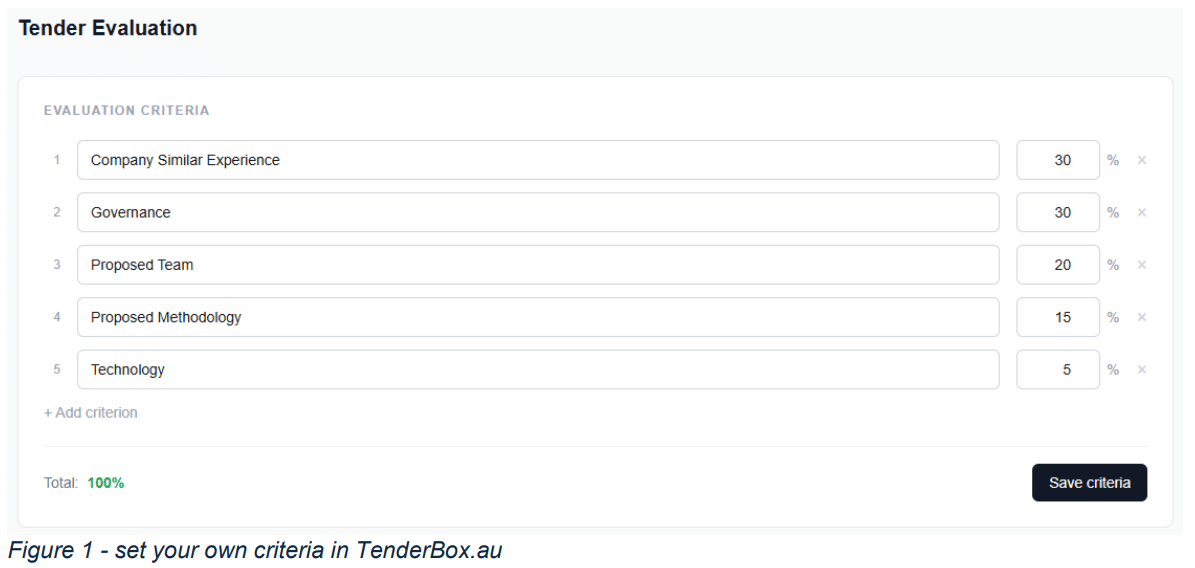
Now the harder part
Once your RFT is ready, the process of actually running the tender is where most committees come unstuck. Emails go back and forth, addenda get sent to some respondents but not others, questions get answered privately, and by the time submissions close you’re not entirely sure you ran a clean process — which matters when you’re spending owners’ funds and need to justify the decision at the AGM.
A clean tender process means all respondents receive the same information at the same time, questions and answers are visible to everyone, submissions are received and opened formally, and there’s a clear record of how you arrived at your recommendation.
That’s a lot to manage over email and a shared folder.
There are purpose-built tools that handle this end-to-end for a flat fee per tender — no subscription, no lock-in. Worth looking at before your next one.
This post appears in Strata News #803.
Craig McDonald
Beyond Condition
E: craig@beyondcondition.com
Great information. The judicial use of AI means that everybody saves time and energy. One day this procedure will actually be mandated.