In regards to cladding, what is your recommended source of information to determine what product is actually being used?

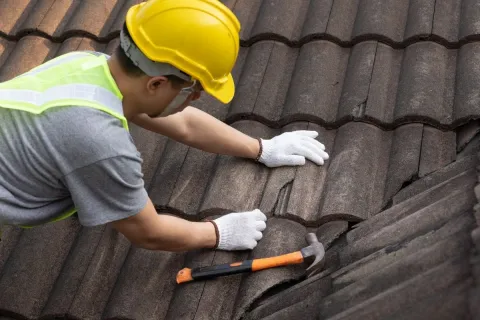
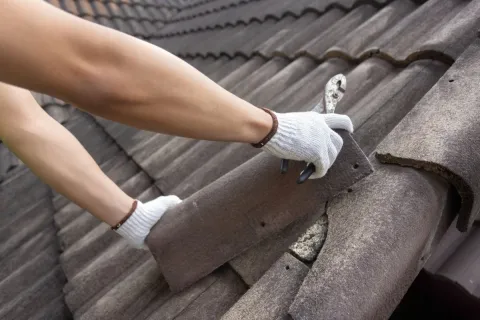
There's no real proper way of determining what cladding is on a building other than doing what we refer to as exploratory work or destructive work.
Obviously combustible cladding is quite a significant feature at the moment in Australia and around the world in terms of what's happening. There's all sorts of various means of identifying what is on your building. I'm presuming, in this instance, there might be some suspicion or concern about what's there and you may want to know what is the material on your building?
Certainly in most instances, there's no real proper way of determining what cladding is on a building other than doing what we refer to as exploratory work or destructive work. What that is, I don't like using the word destructive, but it is taking a sample from a building. It is about taking a core sample out of the building and being able to look at and get that core sample tested, and then that will determine whether the material is actually compliant, combustible, or not. That's the that's the beginning of the whole journey, is starting with that testing, that's where it commences.
One of the biggest problems in the industry with this cladding debacle is that you would expect that you would be able to pull out some construction documents and have a look at the documents themselves as to what particular cladding was specified in the first place by the architect or even delivery documents. What was delivered and put on the building. I can categorically tell you that information is inherently unreliable because this period of time we've been through where quite often builders don't follow the original design, or a developer may put pressure on a builder to get it finished quicker and buy a cheaper material or whatever. The only real way to understand what's on the building is to get that tested. You'd be pulling off a portion of the material, looking for markings and things on the back of the cladding. Normally when we do that, we'll do it in a discreet location in the building. We want to do it on the front facade or anything. We'll find some way where you can do it and test that just to see where that's going.
There's pressure from insurers at the moment. They are paranoid, they are asking owners to please explain, 'Do you have a building that has got combustible cladding?. It is a pretty unfair question in my view because most owners really don't know.
If you are concerned at all, there are avenues to get tests done. This will at least give you some peace of mind as to whether a material on the building is flammable or not and then that would start you on a journey down a pathway of remediation if that was the case.
Regarding costs involved for this type of explorative work, it's on a case by case basis. Ordinarily, it's going to depend on the building. Another important issue I'll add into is (depending on the size of the building, you're talking about), the other issue we've found with combustible cladding on a lot of buildings is that we will do a test in a particular place on a building, and we'll determine that that might not be combustible. But we'll get around the corner and do another test and it's a completely different product and it is combustible. Depending on the size of the building, sometimes there has to be a series of samples taken. Again, in the industry, there's lots of different things that have occurred, but sometimes a builder might get three quarters away through, they've ran out of materials, I urgently want to get the job finished, they ring around, they try and find where they can get something, somebody's got a material and they'll say, 'It'll be fine, just put it on', and it turned out it was combustible. It might have been a mixed use of materials through whatever reasons. Quite often it does result in doing multiple tests, not just one.


Log in to your existing Lookupstrata Account to download the printable file.
Bruce McKenzie is National Manager for Commercial Services and Major Projects at Sedgwick's Building Consulting Division, the largest claims management corporation in the world. With over 36 years' experience as a licenced building contractor, Bruce has received multiple state building excellence awards and a National Building Award through Master Builders Australia.
Since joining Sedgwick a decade ago, Bruce has led the growth of its Commercial Services Division, managing major building projects nationally across the insurance and private sectors — including property damage, catastrophe events and large-scale remediation. He has acted as expert witness on high-profile litigation matters, most notably the Lacrosse Tower combustible cladding case, and served as Program Director for Cladding Safety Victoria, overseeing the recladding of over 40 buildings as part of the Victorian Government's $600 million rectification program. In 2022 he commenced a secondment as Program Director for Project Intervene with the NSW Office of the Building Commissioner, addressing serious defects in recently constructed buildings.
Bruce is a licensed builder in NSW, QLD, VIC and ACT, and holds an Advanced Diploma in Building & Construction Management and a Diploma of Project Management.






Lookupstrata Directory
Looking for WA Strata Specialist in your area? Search within our LookUpStrata Directory for the best list of contacts available
Search the directory
Comments
Log in to leave a comment