Our ensuite was built without any waterproofing membrane, which we've only just discovered. Will body corporate insurance cover the rectification if we pay the excess?
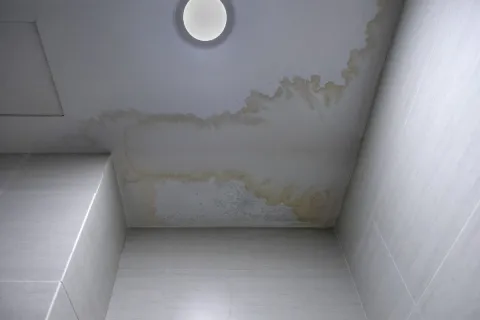
We had a professional inspect the flooring and the wet, decaying door surround in our ensuite, and they found the original builder didn't install any waterproofing membrane at all. The complex was built around 2008, so it's well out of warranty.
Do floors and slabs fall under body corporate insurance after all this time? Is it possible to make a claim to rectify our ensuite (removing the tiles, installing the waterproofing membrane and retiling), with us paying the excess?
We bought the unit a year ago and assumed it was just bad luck to now find this problem, even after paying for a pre-purchase building inspection.

Body corporate insurance generally won't cover installing a membrane that was never there, because it's a construction defect rather than damage from an insured event.
Does body corporate insurance cover a missing waterproofing membrane?
Unfortunately, in most cases, the body corporate's insurance would not cover the cost of installing a waterproofing membrane that wasn't installed in the first place.
Why cover is unlikely to be available
Your question asked whether floors and slabs fall under body corporate insurance, once any builder's warranty has long since expired.
Yes, floors and slabs do form part of the property or building structure that body corporate insurance covers. However, the fact that an item forms part of the insured property does not automatically mean insurance cover is available.
For cover to apply, body corporate insurance policies first require an insured event to have occurred. Depending on the insurer, this is often described as a sudden and accidental event. The event must also not fall within any policy exclusions. In your case, the difficulty arises at both of these steps.
Most insurers would not consider the discovery of a missing waterproofing membrane to be an insured event. While finding the issue has come as a sudden surprise, particularly after obtaining a pre-purchase building inspection, the underlying problem is that the membrane was never installed. In other words, the issue is not damage caused by an event, but the discovery of a defect that has existed since your bathroom's construction.
Even if an insurer accepted that the failure to install the waterproofing membrane was an event, most body corporate policies exclude the cost of correcting defects or faulty work. As a result, the cost of installing the missing membrane and the related works, such as removing and replacing tiles, would generally not be covered.
When might waterproofing-related damage be covered?
This doesn't mean waterproofing can never be covered by body corporate insurance.
For example, if a heavy candle was accidentally dropped in the bathroom and cracked the tiles and waterproofing beneath them, there would generally be cover available for repairing the damage to the tiles and waterproofing, subject to circumstances that bring in other policy terms, conditions and exclusions.
The key difference is that the accident has damaged something that was already there. In your situation, the issue is that the waterproofing membrane was never installed. As a result, body corporate insurers would generally view the matter as a construction defect rather than damage caused by an insured event.
This is general information only and doesn't consider your building's specific policy or any additional circumstances you haven't described. You should seek advice from your broker regarding your situation.
Related webinar


Log in to your existing Lookupstrata Account to download the printable file.
As Claims Manager at BAC Insurance Brokers, Jenny Mills brings 17 years of insurance experience, including 11 years with BAC. A Senior Associate CIP ANZIIF, Jenny specialises in complex strata claims management, helping strata communities navigate challenging claim scenarios through clear guidance, strong insurer advocacy and practical solutions. Her focus is on reducing uncertainty and achieving the best possible outcomes for clients.







Lookupstrata Directory
Looking for QLD Strata Specialist in your area? Search within our LookUpStrata Directory for the best list of contacts available
Search the directory
Comments
Log in to leave a comment