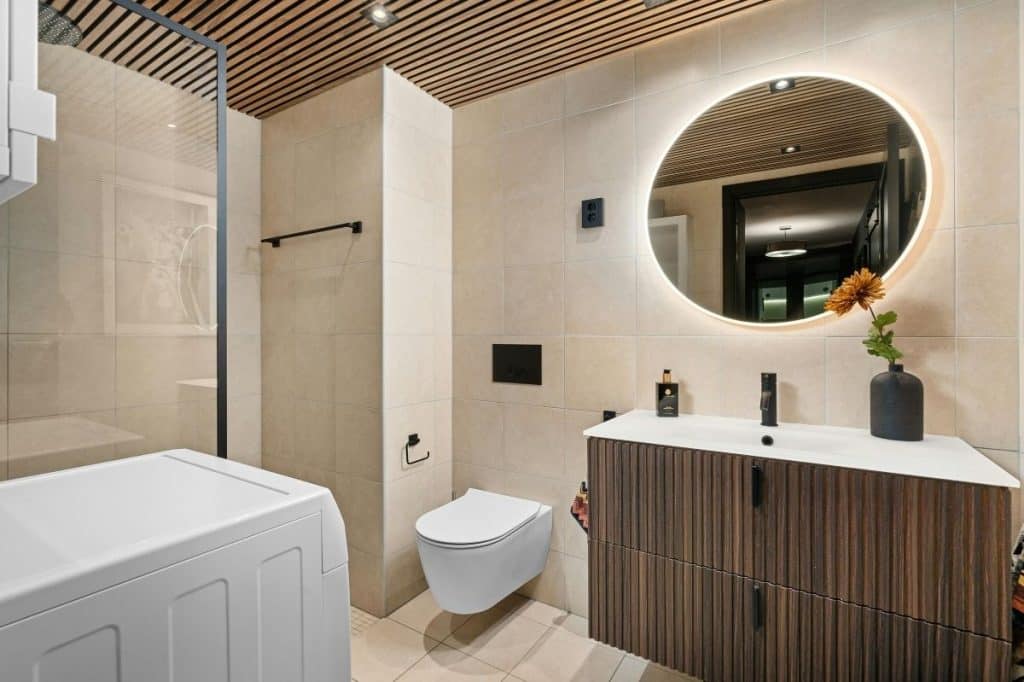
Question: Some units in our building have concealed in-wall cisterns sitting within a common wall. As only one lot uses the cistern, is it the owner’s responsibility?
Our building has more than 40 units, but some units have toilets which have concealed or in-wall cisterns within a common wall. Who is responsible for fixing the toilet cistern when it fails, the owners corporation or the unit owner?
Note there are currently no by-laws that discuss sole benefit criteria to determine a unit’s responsibility for repairs to items located on common property. The committee and strata managing agent are divided on the issue.
Answer: An in-wall cistern within a common wall is common property, and repairing or replacing it is the owners corporation’s responsibility.
This one divides committees constantly, but the law is more settled than the debate suggests. The starting point is not “who benefits,” it’s where the item sits.
1. Start with the boundary, not the benefit
In NSW, what is lot property and what is common property is determined by the registered strata plan, read with the boundary rules in the Strata Schemes Development Act 2015 (the SSDA). Under section 6 of the SSDA, where a strata plan uses standard boundaries, the boundary of a lot for a vertical wall is the inner surface of the wall. Everything from that inner surface outwards, including the body of the wall itself, is common property.
A concealed cistern housed within a common wall therefore sits outside the lot boundary. It is in common property. That is the decisive fact, and it’s why the “sole benefit” framing the committee is wrestling with doesn’t actually drive the outcome here.
2. “Sole benefit” is a narrow exception, and it doesn’t apply to a cistern
The benefit-based test people are reaching for comes from the definition of “common infrastructure” in section 4 of the SSDA. The relevant part captures pipes, wires, cables or ducts that are not for the exclusive benefit of one lot, together with the cubic space enclosing them. That definition matters for determining whether services running through the structure are common property or lot property, and even then, the “exclusive benefit” carve-out applies only to older schemes (broadly, plans lodged before 1 July 1974).
There are two reasons it doesn’t rescue the “it’s the owner’s problem” argument:
- A cistern is a fixture. It isn’t a pipe, wire, cable or duct, so it doesn’t fall within that definition at all. The supply pipe feeding it might; the cistern unit itself does not.
- Even if you tried to stretch the analysis, the cistern is physically embedded in a common wall. It is part of, or attached within, common property regardless of who uses it. Whether something is for the benefit of one lot only changes the answer for the specific categories of service infrastructure listed in the Act. It does not convert a structural in-wall fixture into lot property.
3. Once it’s common property, section 106 does the rest
Section 106(1) of theStrata Schemes Management Act 2015 (the SSMA) requires an owners corporation to properly maintain and keep in a state of good and serviceable repair the common property, and section 106(2) requires it to renew or replace fixtures and fittings comprising common property. The courts treat this as a strict, ongoing statutory duty. In Seiwa Pty Ltd v Owners Corporation SP 35042 the Supreme Court confirmed it is an absolute obligation.
So if the failed cistern is within the common wall, repairing or replacing it is the owners corporation’s responsibility, not the individual owner’s. An owner generally isn’t even permitted to carry out works on common property without the owners corporation’s consent, and won’t be indemnified for doing so if they go it alone.
4. What about the “Who’s Responsible?” guide?
You may see a quick-reference guide that lists “Toilet Cistern” as the owner’s responsibility. Read together with the rest of the guide, that’s consistent with the answer above rather than at odds with it. The single-letter entries describe the default, being an exposed or in-lot cistern within the lot’s airspace, and the guide’s own explanatory notes then apply the same location-based logic as the legislation. Its notes on plumbing and burst pipes state that an item is the owner’s responsibility only where it falls within the lot. In contrast, an item outside the lot, or within a wall, floor or ceiling that abuts common property or another lot, is the owners corporation’s. That mirrors the common infrastructure and boundary concepts in the Acts. A concealed cistern in a common wall falls on the owners corporation’s side of that line.
The guide, as it states, is a general starting point. It directs readers back to the strata plan and by-laws and recommends advice in anything but the straightforward case. So it’s a sound first reference; it just isn’t designed to settle an unusual fact pattern like this one, which the registered plan and the Act decide.
5. Where the line moves
A few practical qualifications, because the answer can shift depending on the plan and the cause:
- Check the registered strata plan first. If the plan defines that lot’s boundaries differently, for example by a notation describing the boundary by reference to structural cubic space, or showing the wall cavity as part of the lot, the boundary may not sit at the inner wall surface. The plan governs. Don’t assume the standard boundary rule applies until you’ve looked.
- Distinguish the cistern from the visible fittings. The flush button, the pan, the seat and the exposed connections inside the bathroom are typically lot property and the owner’s responsibility. It’s the concealed cistern within the common wall that lands on the owners corporation.
- Cause matters for cost recovery. If the failure resulted from an owner’s (or their tenant’s) act, neglect or unauthorised alteration, the owners corporation may still have to carry out the repair to discharge its section 106 duty, but it can look to recover the cost from the responsible owner. The repair obligation and the cost-bearing question are separate.
- A by-law can change the allocation in the future. The scheme could adopt a common property memorandum or pass a by-law dealing with maintenance of items like in-wall cisterns. Section 106 is expressly subject to any such by-law. But that’s a forward-looking fix the owners corporation chooses to make. It’s not the current default, and the absence of one (as here) doesn’t push responsibility onto the owner.
Bottom line
On standard boundaries, an in-wall cistern within a common wall is common property, and repairing or replacing it is the owners corporation’s job under section 106, irrespective of the fact that only one lot uses it. The strata committee should confirm the boundary on the registered strata plan, action the repair as common property, and pursue cost recovery only if the failure was caused by an owner. The “sole benefit” question only becomes live if the scheme decides to make a by-law about it.
As always, owners and committees should check their scheme’s registered strata plan and by-laws, and seek their own advice on borderline cases, as the registered plan can displace the standard position.
This post appears in Strata News #789.
Tim Sara Sara Strata E: tim@sarastrata.com.au P: 04 8500 7960