


Question: Our new neighbours refuse to pay strata levies. Their tenants block our garage access. What other options do we have besides NCAT?
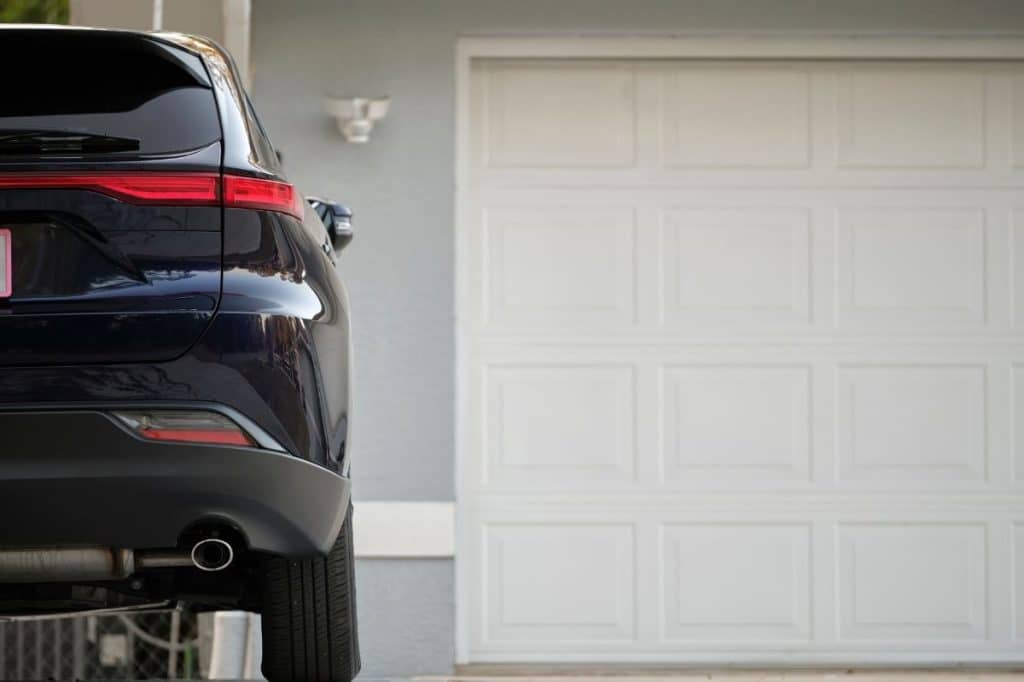
I am an owner of a strata unit in a two-lot strata complex and have been the secretary/treasurer for the last six years with no problems. A new owner purchased the other unit and their tenants moved in. The owners refuse to recognise they have purchased in a strata. Therefore, they refuse to pay any strata levies. They told their tenants they could park outside their door on the common property driveway, which restricts access to our unit 1 garage.
The owners keep threatening NCAT action and say they will call the police if I approach their tenants about moving their car. I understand I can use an NCAT form for non-compliance of parking by-laws, but the required legal processes are difficult to comply with, and the new owner knows this and continues to ignore the issues.
What other options are available apart from going through NCAT?
Answer: A compulsory strata manager appointment may be the most practical circuit-breaker for a deadlocked two-lot scheme.
Two-lot strata: a difficult neighbour refusing to pay contributions and blocking the driveway. What can be done?
First, I want to acknowledge how exhausting this situation must be. Six years of trouble-free strata living, and then overnight the dynamic shifts because a lot changes hands. This is the reality of strata. It can pivot from frictionless to fraught the moment a new owner arrives, and there is rarely a way to predict it.
I’d also gently observe that this kind of scenario is precisely why complacency in a small community is risky. Many two-lot schemes operate informally for years, with no formal meetings, no documented decisions and no real engagement with the by-laws because everyone gets along. Once a difficult owner buys in, the absence of infrastructure suddenly matters a great deal. That is worth keeping in mind for any small community reading this.
One terminology note before I start. The money owners pay is legally a contribution (levy) — that is the word used in section 85 and section 86 of the Strata Schemes Management Act 2015. I use “contributions” throughout below. It matters here, because contributions are paid into the community’s own funds. They are not a fee paid to anybody else.
“The owners refuse to recognise they have purchased in a strata”
I want to deal with this phrase first, because it’s the heart of the problem.
I’ve encountered this attitude before, and so have many strata managers. It’s a particular kind of owner who genuinely believes that because they bought what looks like a house, the strata scheme is some fiction that doesn’t really apply to them. It tends to sit alongside a broader scepticism about whether laws, contracts, or government bodies have any real authority over what someone does on their own property. You see it occasionally in strata, and increasingly in community and neighbourhood schemes.
However, it is not a matter of opinion. If there is a registered strata plan, there is a strata scheme. The owner is bound by the Strata Schemes Management Act 2015, the Strata Schemes Development Act 2015, and the registered by-laws of that scheme. They had constructive notice of all of this the moment they signed the contract. The strata information certificate, the by-laws and the strata plan would all have been part of their conveyancing pack. Their belief that the scheme doesn’t exist has precisely zero legal effect.
The good news for you: you do not need to convince them. You do not need to win an argument about whether strata law is real. The law operates whether they accept it or not. The Local Court and NCAT will not entertain a “strata isn’t a real thing” defence. They will simply apply the legislation. Stop trying to persuade them. It is wasted energy, and it gives them oxygen.
You’re dealing with two separate problems, and there are two separate pathways
You have assumed both problems must go through the NCAT by-law breach process. They don’t. These are two distinct issues with two distinct legal pathways, and that’s actually helpful.
Problem one: unpaid contributions This is a debt. Under section 86(2A) of the Strata Schemes Management Act 2015, an owners corporation may, without obtaining an order under that section, recover as a debt in a court of competent jurisdiction — usually the Local Court — a contribution not paid at the end of one month after it becomes due and payable, together with any interest payable and the reasonable expenses of the owners corporation incurred in recovering those amounts.
NCAT is not required. Mediation is not required. The owners’ views about whether strata exists are not required.
What is required has changed in the last two years, and this is where I see communities come unstuck. Before a Statement of Claim can be issued, the following all need to be in order:
- The contributions were properly determined and notified. Estimates and contributions determined at a general meeting, and written notice of each contribution given to the owner at least 30 days before it falls due, under section 83.
- Each contribution notice carried the hardship information. Since 27 October 2025, contribution notices must be accompanied by a Financial Hardship Information Statement, or include the information from it. This is a standing requirement, not a one-off. If the notices went out without it, fix that before you go anywhere near a court.
- The contribution has remained unpaid for more than one month.
- At least 30 days’ notice of the recovery action has been given. Section 86(4) provides that an owners corporation must not take action to recover an amount under that section unless it has given the person against whom the action is to be taken at least 30 days notice of the action. Section 86(5) sets out what that notice must contain, beginning with the amount of the contribution, interest or expenses sought to be recovered. Note the period — it was 21 days until the 2025 reforms and it is now 30. Using the old number is a straightforward way to hand a defendant a procedural argument.
- There is no payment plan on foot. Section 86(6) provides that an owners corporation must not take recovery action from an owner where the amount is being dealt with under a payment plan and the payment plan is being complied with by the owner.
Two further points on payment plans, because they are commonly misunderstood as something still coming. They are already law and have been since 27 October 2025.
An owner requests a payment plan using the standard form published by NSW Fair Trading. The owners corporation must consider the request. It cannot resolve at a meeting to refuse all payment plans, cannot charge a fee for making or continuing with a plan, must respond in writing within 28 days, and must give written reasons for any refusal. A refusal is only reasonable on limited grounds, essentially where agreeing to the plan would leave the administrative fund or capital works fund without sufficient money. Plans run for up to 12 months and cannot cover future contributions.
And when money does come in, section 86(7) fixes the order it is applied: contributions first, then interest, then recovery expenses — unless a court or the Tribunal has ordered otherwise, or the owner in arrears has specified how payments are to be applied.
Most owners corporations engage a debt recovery lawyer for the court process. The reasonable expenses of recovery are recoverable from the defaulting owner under section 86(2A), so the cost is generally not ultimately borne by the community.
A word of caution given the context. An owner who denies the scheme exists will absolutely try to argue the contributions were never properly struck, or that the notices were defective. Don’t give them that hook. Check the meeting paperwork, the notices, the hardship statements and the 30-day notice before you file anything.
Problem two: the parking on common property This is a by-law breach, and the pathway is:
- Resolve to issue a Notice to Comply. The owners corporation must be satisfied the by-law has been contravened and must authorise the notice. That can be done by resolution at a general meeting or by ordinary resolution of the strata committee. In a two-lot scheme you already have a strata committee whether or not anyone has thought about it — section 30(3) provides that the committee for a scheme comprising two lots consists of the owner of each lot who is a sole owner (or the company nominee where the sole owner is a corporation, or the nominated co-owner where a lot is co-owned). There is no election.
- Issue the Notice to Comply under section 146. It must be in the form approved by the Secretary and must contain a copy of the specified by-law. Here is the detail people most often get wrong: the notice goes to the person actually contravening the by-law. If the tenants are parking the car, the notice is served on the tenants, not the owner. If the breach is the owner’s own conduct — the owner’s vehicle, for example — it goes to the owner. Get this wrong and the notice is defective. You say the owners have directed the tenants to park there. The tenants are still committing the practical breach, so the notice goes to them.
- Apply to NSW Fair Trading for mediation. This is compulsory before most NCAT applications under section 227, and it is free.
- If mediation fails or the other party refuses to participate, go to NCAT. You have two options here and they are commonly conflated. Under section 147, NCAT may order a person to pay a monetary penalty of up to 10 penalty units ($1,100) where the owners corporation gave a Notice to Comply and the person has contravened the by-law since. That rises to up to 20 penalty units ($2,200) where the person contravenes within 12 months after the Tribunal imposed a penalty for a previous breach. Separately, under section 232, NCAT can make an order to settle a dispute or rectify a complaint about the operation, administration or management of the scheme — including an order that a person comply with the by-laws. Penalty proceedings punish; a section 232 order compels. You may want both.
Why step one is harder in a two-lot scheme than it looks
This is the structural problem, and it is worse than most people expect.
If you take the general meeting route, clause 17(2)(c) of Schedule 1 sets the quorum for a two-lot scheme at two owners. Both owners must be present for the meeting to make decisions. A hostile owner does not need to attend and vote your motion down. He simply doesn’t turn up, and the meeting cannot proceed.
If you take the strata committee route, you and the other owner are the entire committee. One vote each. If unit entitlements are equal, as they typically are in a duplex, nothing passes.
That is the structural weakness of two-lot schemes. The very people who need the enforcement process the most are often the ones blocked from using it. It is also, importantly, evidence in its own right: where a community genuinely cannot make decisions, that goes directly to the question of whether it is functioning satisfactorily, which is the gateway to the option below.
One practical note. You have mentioned being threatened with the police when approaching the tenants directly to ask them to move their car. That kind of informal doorstep request should stop. Don’t approach the tenants for anything other than formal service of a Notice to Comply once authorised. Everything else goes through the formal channels, in writing.
The compulsory strata manager option
For an irreconcilable two-lot dispute, there’s a further option many owners don’t know about: applying to NCAT under section 237 for the compulsory appointment of a strata managing agent.
NCAT can appoint a strata manager, and can order that the functions of the owners corporation, the chairperson, secretary, treasurer and strata committee be exercised by that manager, where it is satisfied that management of the scheme is not functioning or is not functioning satisfactorily. In a two-lot deadlock with one owner denying the scheme exists, that is a strong candidate for a “not functioning satisfactorily” finding.
The appointed strata manager has legal authority to determine contributions, recover them, issue notices to comply, and act on behalf of the owners corporation. Decisions no longer require the cooperation of the other owner. The cost is borne by the community, so shared between both lots, and it is recoverable in the same way as any other contribution.
This may well be the cleanest path through a scenario like this, precisely because it removes the need to get any further resolution through a deadlocked owners corporation.
Will the coming reforms help?
NSW strata law is in the middle of the biggest reform program in a decade, and two-lot schemes get particular attention. Timing matters here, so a status check.
The Strata Schemes Legislation Amendment Act 2025 has been commencing progressively — 1 July 2025, 27 October 2025 and 1 April 2026. Everything I have described above as current law is in force now.
The Strata Schemes Legislation Amendment (Miscellaneous) Act 2026, the fourth and final tranche, has passed both Houses. A defined set of its provisions commenced on assent; the remainder commence on days to be appointed by proclamation. The two-lot provisions are in that second group and have not commenced. Check the current consolidated Act before relying on them.
The headline change for the questioner is a new section 7A. It will exempt strata schemes comprising two lots from a list of ordinary requirements: passing special resolutions, holding annual general meetings under sections 14 and 18, holding other general meetings under section 19, constituting a strata committee under section 29, preparing a 10-year plan of anticipated major expenditure under section 80, and giving information to the Secretary under regulations made under section 271(2)(o). Related provisions are amended for consistency, including section 74(5)(a) on capital works fund decisions and section 160(4)(a) on insurance decisions.
In place of all that procedure, decisions that would ordinarily be made by the owners corporation in general meeting, by an officer of the owners corporation, by the strata committee, or by an officer of the strata committee, must instead be made by a written resolution of the owners corporation approved by all owners.
The intent is sensible. Most two-lot schemes are cooperative arrangements between people who know each other, and the formal meeting machinery is overkill.
But here is the uncomfortable truth: those reforms are designed for two-lot schemes that work. They assume both owners will sign things. They replace the general meeting with a written resolution requiring every owner’s signature. For a dispute-ridden two-lot scheme like yours, where one owner won’t engage at all, that arguably makes things harder rather than easier. A hostile owner won’t even need to stay away from a meeting. He can simply decline to sign, and nothing moves.
Which makes the section 237 compulsory strata manager pathway more important, not less. If decisions in a two-lot scheme can only be made by unanimous written resolution, then a deadlocked community is, by definition, not functioning satisfactorily — and that is the gateway to a section 237 application.
Two other changes in the 2026 Act are worth watching for anyone in this position:
- A mandatory reminder notice. Owners corporations will be required to issue a reminder notice between seven and 10 days after a contribution becomes overdue, before recovery action can be taken, and the regulations may prescribe further circumstances in which recovery action may or may not be commenced. Another procedural step to build into the process once it starts.
- Lot-specific cost orders. NCAT will gain power to order that money payable by an owners corporation be paid from the contributions of specified lots only, rather than spread across all lots. That is directly useful where one owner’s conduct has generated the cost — legal fees, repairs, recovery action.
The honest summary: the reforms don’t introduce a silver bullet for hostile two-lot disputes, and in one respect they make the deadlock problem worse by removing the general meeting as a forum. Act under the law as it stands today, keep an eye on the commencement proclamations, and don’t wait for the reforms to solve the underlying problem.
What about just sorting it out?
You asked what options exist apart from going to NCAT. The honest answer: with someone who denies the scheme legally exists, threatens NCAT and the police whenever approached, and weaponises the difficulty of the process, the prospects of an informal resolution are close to zero. People who are willing to be reasonable don’t behave this way.
There’s an analogy I find useful here. If there were no parking wardens, plenty of people would park wherever they wanted, for as long as they wanted, blocking driveways without a second thought. The only thing that compels them to do otherwise is knowing that someone is empowered to issue a fine. The Notice to Comply, the mediation process, the NCAT order and the Statement of Claim are the strata equivalent. Without them, a person determined to ignore the rules will keep ignoring them. And someone who genuinely believes the rules don’t exist at all is the textbook case for needing the system to do the work.
None of this is as expensive as it feels when you’re staring at the forms for the first time. Mediation through Fair Trading is free. NCAT is a low-cost forum: as at 1 July 2026, a strata and community schemes general application is $133, or $266 where the applicant is a corporation — and an owners corporation will generally pay the corporation rate. Lodging a general application together with an application for interim orders is $267, or $534 for a corporation. The Local Court debt recovery process is well-trodden by the strata industry. Yes, it takes time, and yes, the process has to be followed properly. But it is not the impossible exercise it can seem.
A final observation
Two-lot strata schemes are, in my experience, consistently the most dispute-prone communities in NSW. The reason is structural: there is no third lot to break a deadlock, no broader committee to absorb conflict, no group dynamic to encourage compromise. Every issue is one owner against the other. When the owners get along, it’s the simplest form of strata living. When they don’t, it’s the hardest.
Your situation is unfortunately a textbook example, made worse by an owner who appears to reject the legal framework itself. My recommendation:
- Stop trying to persuade this owner of anything. Communicate only in writing.
- Get the paperwork in order — meetings, contribution notices, hardship statements, records.
- Prepare and serve a section 86(4) notice for the unpaid contributions, then instruct a debt recovery lawyer.
- Lodge for Fair Trading mediation on the parking, with realistic expectations about the two-lot procedural obstacles.
- Seriously consider a section 237 application if the community genuinely can’t function.
The legal framework exists for exactly this scenario. Your neighbour’s refusal to believe in it doesn’t change a thing.
Always check your scheme’s registered by-laws. What I’ve described above assumes a standard parking by-law and standard scheme operation. For a two-lot dispute of this nature, an early conversation with a strata lawyer is money well spent, particularly to make sure your levy paperwork will hold up if challenged and to navigate the procedural realities of getting motions through a deadlocked owners corporation.
This post appears in Strata News #806.
Tim Sara Sara Strata E: tim@sarastrata.com.au P: 04 8500 7960
