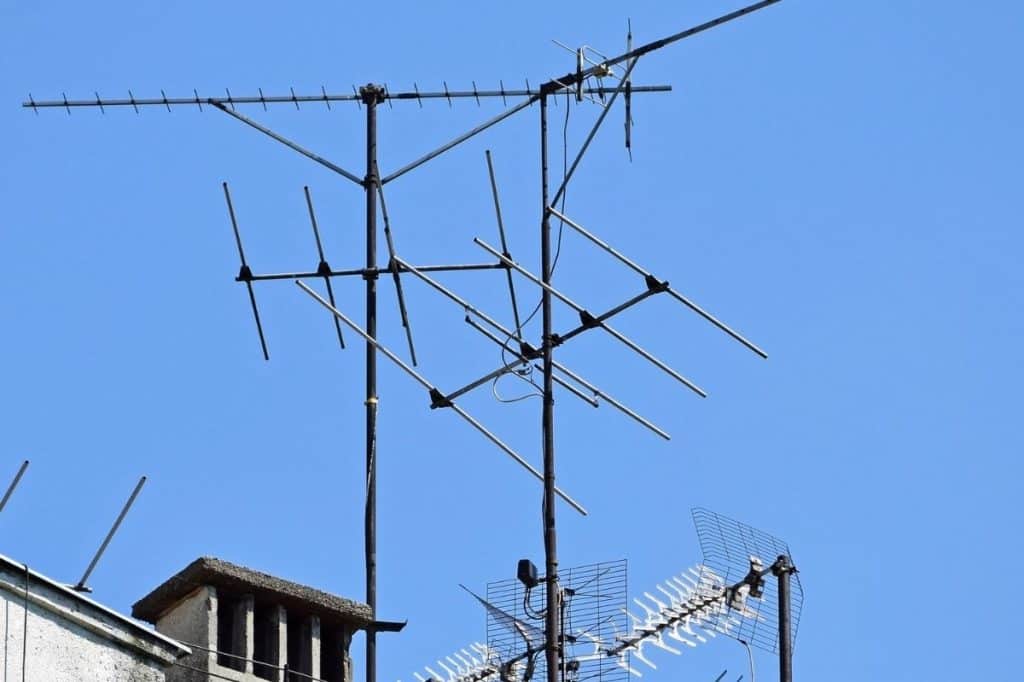
Question: Owners installed their own TV antenna. Rusted bases are causing water ingress. Who is responsible for the repairs?
Individual owners in our small block of units erected their own TV antennae on the roof. The antenna bases have rusted, allowing water to enter the ceiling of one unit. Some owners feel the owners corporation should repair the rusted bases. Is the owners corporation responsible for maintaining owner-installed antennae, or does that responsibility stay with the owners?
Answer: A shared antenna system is likely the owners corporation’s responsibility, while individually installed antennae may remain the owner’s.
Responsibility for individually installed TV antennae will depend on the strata records, the by-laws, the approvals given at the time of installation, and whether the relevant antennae form part of common property or remain owner-installed improvements.
In NSW, the starting point is that the owners corporation must properly maintain and keep common property in good repair. It must also renew or replace fixtures or fittings that are comprised in common property. This obligation arises under section 106 of the Strata Schemes Management Act 2015 (NSW). However, that does not automatically mean that every item attached to common property becomes the owners corporation’s maintenance responsibility. The key question is whether the antenna, base, bracket, fixing, cabling or roof penetration is owners corporation property or an individual lot owner’s installation.
There is an important distinction between a shared antenna system and individually installed antennae. If there is a common antenna system serving more than one lot, including shared cabling or common distribution infrastructure, that is more likely to fall within the owners corporation’s maintenance responsibility. However, where single lot owners originally installed individual antennae for their own use and benefit, the position may differ.
The fact that an antenna is located on the roof or fixed to common property does not, by itself, necessarily mean the owners corporation has accepted ongoing responsibility for maintaining that antenna. The owners corporation should check whether the antennae were approved, whether any by-law was registered, whether conditions of approval were imposed, and whether the relevant owner was required to maintain the installation and make good any damage caused by it.
In many schemes, an owner-installed item attached to common property should have been approved on terms requiring the owner to maintain it, repair it, and indemnify the owners corporation for damage caused by the installation. If there is a registered common property rights by-law or specific approval dealing with the antennae, that document should be reviewed first. It may answer the question directly.
However, the water ingress aspect should be treated separately and urgently. If rusted antenna bases or roof penetrations are allowing water to enter the ceiling of a lot, the owners corporation should not ignore the issue while responsibility is being debated. The roof, ceiling cavity and waterproofing elements are commonly common property, and the owners corporation should arrange an inspection to identify the source of the leak, stop further water entry, and prevent further damage.
Once the cause is confirmed, the cost responsibility can be considered. If the leak is caused by a failure of common property, the owners corporation will generally be responsible. If the leak is caused by deterioration of an individually installed antenna, base, bracket or penetration installed for the benefit of one lot, the owners corporation may have grounds to require the relevant owner to repair or remove the installation and make good the affected common property, subject to the scheme’s by-laws, approvals and evidence.
For a small block of four units, a practical approach would be for the owners corporation to:
- check the strata plan, by-laws and any past approvals for the antennae;
- arrange a suitably qualified contractor to inspect the antenna bases, roof penetrations and source of water entry;
- determine whether each antenna serves one lot or more than one lot;
- undertake urgent works required to stop further water damage; and
- then decide whether the cost should be paid by the owners corporation or recovered from the relevant owner.
Accordingly, it is too broad to say that the owners corporation is automatically responsible simply because the antennae are on the roof. It is also too broad to say that the lot owners are automatically responsible without checking the records and the cause of the leak. The likely position is that a shared or original antenna system is more likely an owners corporation responsibility, while individually installed antennae erected by individual owners for their own benefit may remain the responsibility of those owners, particularly where they are causing damage because of rusted bases, fixings or penetrations.
This post appears in Strata News #799.
Abe Ayoubi W: Senior Strata Manager (NSW) E: abe.strata@gmail.com